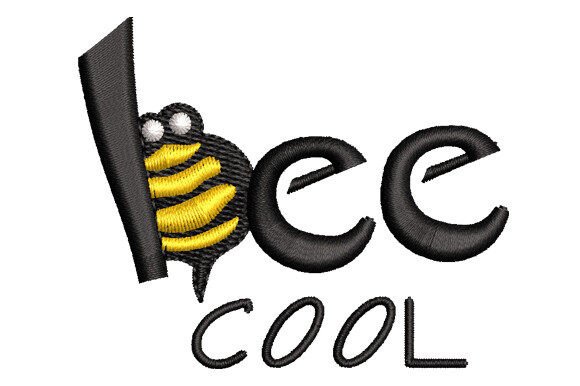
Bee Cool: A Smart Embroidery Choice for Small Business Branding
First Impression: Friendly, Confident, and Instantly Recognizable
As an embroidery designer who’s digitized and stitched thousands of logos for cafés, boutiques, bakeries, florists, and pet brands, my first read on Bee Cool is immediate: this isn’t just decorative—it’s strategic. The name alone signals warmth, approachability, and quiet confidence. Paired with “Honey Bee,” it lands as playful yet professional—neither overly cutesy nor stiffly corporate. That balance is rare in inspirational embroidery designs, especially ones built for real-world business use. It feels handmade without sacrificing polish, modern without losing charm, and bold enough to hold attention—but never at the expense of legibility or stitch integrity.
Where Bee Cool Shines in Real Small Business Merchandise
Bee Cool thrives where small businesses need consistency *and* character: embroidered patches for staff uniforms, chest logos on aprons and work shirts, front-cap accents for café teams, minimalist tote bag designs for boutique giveaways, and subtle sleeve details on branded tees. Its honey bee motif reads clearly at 2.5"–4", making it ideal for custom apparel that must communicate brand identity at a glance—even from across a farmers’ market stall or coffee shop counter.
- Embroidered patches: Clean outlines and moderate stitch density mean Bee Cool holds up beautifully when heat-applied or sewn onto denim jackets, canvas totes, or flannel shirts—no puckering or thread breakage under normal wear.
- Apron embroidery & cap embroidery: The design’s centered composition and balanced negative space allow it to anchor a garment without overwhelming it—critical for hospitality and retail staff who wear branding all day.
- Tote bag design & product packaging accents: As a standalone mark, Bee Cool adds artisanal credibility to handmade product labels, gift tags, or reusable shopping bags—reinforcing care, craft, and local authenticity.
- Etsy branding & craft business assets: When paired with neutral thread colors (like oatmeal on navy or charcoal on cream), it elevates digital embroidery file listings and printable mockups—helping buyers visualize premium finished product before stitching begins.
Use With Intention: Where to Pause and Plan
Even strong designs like Bee Cool require thoughtful application. Avoid shrinking it below 1.75" for embroidered patches—fine antennae or wing details may blur or vanish entirely on curved cap fronts or tiny sleeve tabs. On dark uniforms or textured fabric (like heavy twill or linen blends), test thread color contrast rigorously: light gold or butter yellow may not pop without a white underlay, while black-on-black risks visual loss after repeated washing.
High stitch density isn’t flagged in the description, but if the honey bee includes tightly filled wings or layered shading, confirm stabilizer requirements—especially for lightweight cottons or stretchy knits used in modern aprons and unisex tees. And always inspect spacing between elements: tight kerning between “Bee” and “Cool” could close up during hooping or fabric shift, weakening readability.
How Bee Cool Strengthens Brand Identity—Beyond Aesthetics
For small business owners, every embroidered detail contributes to perceived value—and Bee Cool delivers on multiple trust signals. Its friendly-but-polished tone reassures customers they’re supporting a capable, human-scaled operation—not a faceless vendor. When stitched consistently across staff aprons, customer totes, and product packaging, it builds visual consistency that boosts recognition faster than text-only logos. That cohesion translates directly to professionalism: a bakery using Bee Cool on flour-dusted aprons and honey jars feels intentional; a pet brand applying it to bandanas and treat bags feels caring and cohesive.
Crucially, Bee Cool supports the handmade product narrative without leaning into cliché. It doesn’t shout “crafty”—it whispers “thoughtful.” That subtlety increases buyer engagement, especially among audiences who value authenticity over flash. In commercial embroidery settings, that quiet confidence helps justify premium pricing and repeat orders.
Practical Designer Notes Before You Stitch
Before committing Bee Cool to your next batch of small business merch, run these checks:
- Test the machine embroidery design in black and white first—this reveals hidden density issues, thin lines that vanish in grayscale, and spacing inconsistencies invisible in color previews.
- Verify how it renders at your smallest intended patch size (e.g., 2" for cap fronts) on actual fabric—not just screen mockups.
- Review thread color pairings against your client’s uniform palette. A single well-chosen contrast (like moss green on ivory linen) often outperforms busy multi-color versions.
- Confirm hoop size compatibility—some honey bee motifs extend wider than standard 4x4 hoops demand re-hooping or larger frames.
- Always stitch a sample on the exact fabric + stabilizer combo you’ll use commercially. Fabric texture changes everything: what flows on duck canvas may pucker on rayon-blend tees.
- Create a printable mockup for client approval *before* digitizing adjustments—this prevents costly revisions mid-production.
- Compare Bee Cool beside your other design assets (logos, icons, typography). Does it harmonize—or compete?
- Double-check commercial licensing terms. Since Bee Cool is positioned for small business merch and branded patch use, ensure your digital embroidery file grants rights for resale, distribution, and unlimited production runs.
Final Thought: More Than a Motif—It’s a Brand Ally
Bee Cool isn’t just another inspirational embroidery design—it’s a versatile, scalable asset for small business owners building identity through tangible touchpoints. Whether stitched on a florist’s linen apron, a pet brand’s organic cotton bandana, or a bakery’s reusable tote, it carries warmth, clarity, and quiet authority. For embroidery shops and apparel decorators, it’s a low-risk, high-return design: easy to digitize, reliable to stitch, and memorable for customers. In a crowded marketplace, that kind of consistency—stitched, not shouted—is how small businesses earn loyalty, one thoughtful detail at a time.