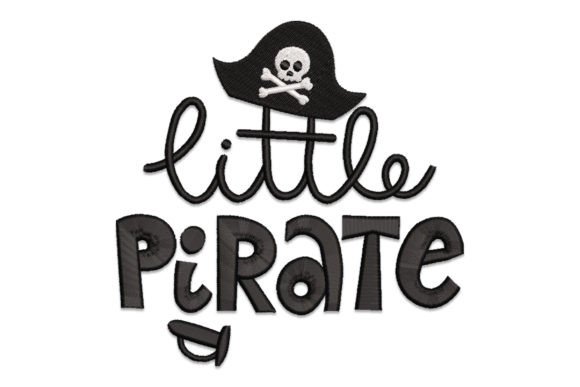
Little Pirate
First Impression: Whimsy That Walks Right Into Your Booth
As an embroidery designer who’s prepped over 200 craft fair booths—from snowy Vermont markets to sun-drenched California pop-ups—I know what stops a shopper mid-aisle. Little Pirate delivers that instant spark: it’s playful, not edgy; charming, not cartoonish; adventurous, not aggressive. It lands squarely in the “whimsical handmade” sweet spot—neither too babyish nor too niche. The prominent pirate hat anchors the design with bold shape and recognizable iconography, while the overall composition feels light, friendly, and full of narrative energy. This isn’t pirate lore for history buffs—it’s pirate spirit for makers who sell joy, nostalgia, and small moments of magic.
Where Little Pirate Shines on Craft Fair Products
At a crowded handmade market, clarity, scale, and emotional resonance win. Here’s where Little Pirate earns its place:
- Tote bags: Perfect as a centered chest logo or playful side accent—large enough to read from three feet away, yet detailed enough to invite closer inspection (especially the hat brim and cheeky expression).
- Aprons: Ideal above the pocket or centered on the bib. Its vertical rhythm complements apron structure, and the whimsy balances kitchen practicality beautifully.
- Tea towel embroidery: Works exceptionally well in the lower corner or centered near the hem—softens linen or cotton texture without competing with weave patterns.
- Embroidered patches: A standout. The hat’s strong silhouette reads clearly even at 2.5”, and the design translates cleanly into sew-on or iron-on formats for jackets, backpacks, and kids’ gear.
- Fabric pouches & small market bags: Scales down gracefully—no tiny faces or fussy details to vanish at 3” width. Keeps its personality intact.
- Pillow covers & giftable handmade items: Adds instant charm to neutral linens. Customers consistently reach for pillows with character-driven embroidery—and Little Pirate delivers personality without clutter.
What Holds Up—And What Needs Careful Use
Little Pirate is built for real-world production—but only if you respect its rhythm. It’s not a dense, fill-heavy machine embroidery design. Instead, it relies on clean outlines, strategic satin stitches for the hat band and eye patch, and open negative space that breathes on fabric. That said, here’s where attention matters:
- Dense stitch areas: The hat crown and band may carry moderate stitch density—test on your target fabric first. Avoid heavy buildup on textured tea towels or thick canvas tote bags without appropriate cutaway stabilizer.
- Tiny details: No micro-lettering or eyelash-thin lines—this is good news. But do verify the eye patch shape and smile curve hold up at 1.75” height before committing to 50+ pillow covers.
- Curved surfaces: On baseball caps, the design works best on the front panel—not the curved bill. Hoop size and placement are critical; use a low-profile hoop and baste first.
- Dark fabric: Thread colors matter more here. Choose high-contrast thread (e.g., cream on navy, gold on charcoal) to preserve the design’s readability and warmth.
- Small sizes: Below 1.5”, the facial expression begins to soften. Stick to ≥2” for patches and ≤1.25” only if using it as a subtle repeat motif—not a focal point.
Why It Converts—From Booth to Etsy Listing
At a craft fair, Little Pirate draws smiles, sparks conversation (“Oh! My nephew loves pirates!”), and invites touch. That human connection is gold. Online, it performs just as strongly: it photographs crisply on natural light mockups, reads clearly in thumbnail size, and pairs beautifully with warm, earthy product photography—think linen aprons, unbleached cotton totes, vintage-style tea towels. As an Etsy seller or digital embroidery file creator, this design supports multiple revenue streams: finished products, printable mockups for your shop banner, and the embroidery file itself (if licensed for commercial use). Its repeatability is a quiet strength—you can produce 30 embroidered patches in one hooping session without redesigning spacing or rethreading constantly.
Design Notes Every Embroidery Business Owner Should Run
Before cutting fabric or uploading to your shop:
- Test the machine embroidery design on scrap fabric matching your intended product—same weight, same finish.
- Check thread contrast against at least two fabric colors (e.g., oatmeal and navy) under natural light.
- Review spacing between elements—especially between hat and face—to ensure no floating stitches or awkward gaps.
- Confirm hoop size compatibility with your embroidery machine and your most-used product types (e.g., 4×4 for patches, 5×7 for tote bags).
- Inspect stitch density in the hat band and eye patch—adjust underlay if needed for stability on lightweight fabrics.
- Use the right stabilizer: tear-away for smooth cottons, cutaway for knits or textured towels.
- Create at least one real-world mockup—a stitched tote bag, not just a digital render—to assess visual impact and buyer appeal.
- Compare how Little Pirate looks across fabric colors: does it feel equally joyful on cream vs. sage? Adjust thread palette accordingly.
- Confirm commercial licensing status before selling finished products—this is non-negotiable for Etsy sellers and boutique makers.
Final Thought: A Design That Sells Because It Feels Human
Little Pirate doesn’t shout. It winks. It fits seamlessly into a curated booth beside botanical prints and rustic lettering—but stands out because it carries story, warmth, and intention. For the embroidery business owner juggling production deadlines and craft fair prep, it’s a reliable, joyful, and commercially smart choice. It elevates a simple tea towel into a keepsake. It turns a plain cap into a conversation starter. And when a parent points and says, “That’s *exactly* what my daughter imagines when she puts on her own little hat,” you know you’ve chosen right. In handmade markets, that moment is everything—and Little Pirate delivers it, stitch by thoughtful stitch.