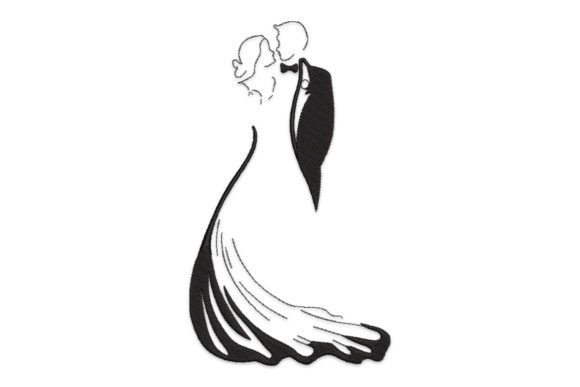
Wedding Bride and Groom Embroidery Design
First Impressions: Romantic, Refined, and Ready for Real Life
As an embroidery designer who’s stitched over 300 wedding-themed pieces—from heirloom baby blankets to boutique aprons—I opened Wedding Bride and Groom expecting charm. What I found was more: a balanced blend of elegance and approachability. The design reads as romantic without being overly fussy, detailed without sacrificing stitch integrity, and stylized enough to feel handmade—not mass-produced. It leans classic with soft curves and clean silhouettes, yet its subtle detailing (think delicate veil texture and groom’s lapel line) gives it quiet modernity. It doesn’t scream “trendy”—it whispers “timeless.” That’s gold for personalized gift products.
Where This Design Truly Shines
Wedding Bride and Groom isn’t just for monogrammed napkins. Its versatility makes it a quiet powerhouse across categories:
- Baby embroidery: Stitched on a muslin swaddle or organic cotton blanket, it transforms into a meaningful “first family” keepsake—especially when paired with baby’s name and birth date in a complementary script.
- Wedding gift: Embroidered on linen pillow covers or ceramic coasters, it becomes a heartfelt, non-cliché present for the couple—more personal than a toaster, more enduring than flowers.
- Nursery decor: On a framed hoop or soft wall hanging, it adds gentle narrative warmth without overwhelming a minimalist space.
- Everyday handmade product: Think embroidered kitchen towels (stitched off-center for visual balance), canvas tote bags (ideal for bridal showers or registry gifts), or even cotton aprons for the couple who cooks together.
- Etsy seller & small shop product: Because it’s emotionally resonant yet production-friendly, it scales beautifully—you can offer it as a digital embroidery file for DIYers *and* as a finished product (e.g., “Personalized Wedding Bride and Groom Pillow Cover”) with clear differentiation in value.
Where to Use It Thoughtfully
Not every surface is equal—and Wedding Bride and Groom rewards intentionality. Here’s where to pause and plan:
- Small lettering or fine details: If the design includes tiny text (e.g., “Est. 2024”), test it at your intended size. Micro-details may blur on low-stitch-count versions or vanish on textured fabric.
- Textured or thick fabrics: Heavy terry cloth towels or quilted blankets demand extra stabilizer—and possibly slight simplification of delicate elements (like veil filigree) to prevent puckering.
- Stretchy baby clothes: Avoid direct application on onesies or knit bodysuits unless you’ve tested with cutaway stabilizer and reduced stitch density. Better to place it on a flat, stable item like a bib or burp cloth.
- Curved surfaces: Mugs, curved wooden ornaments, or rounded tote handles distort stitching. Stick to flat or gently contoured items unless using specialized hoops or digitizing adjustments.
- Dark fabric: Light thread colors (ivory, blush, silver) often need underlay or additional passes for coverage. Always run a printable mockup first.
- Frequent-wash items: For embroidered towels or baby blankets, confirm the stitch density supports durability—and choose high-quality, colorfast thread. Overly dense fills can stiffen fabric; too loose, and details fade fast.
Why It Builds Trust—and Turns Browsers Into Buyers
Customers don’t buy embroidery files—they buy meaning, memory, and craftsmanship. Wedding Bride and Groom delivers that instantly. Its emotional clarity (“This is *their* love story, made tangible”) elevates perceived value far beyond thread and fabric. When photographed well—on natural light, styled with real-life context (a folded towel beside fresh flowers, a pillow nestled on a nursery sofa)—it sparks imagination. That’s how Etsy sellers get saved, shared, and reordered. More importantly, it signals handmade quality: no stock vectors, no generic clipart. Just thoughtful, human-centered design. That builds trust faster than any policy page.
Practical Embroidery Notes You Can’t Skip
Before you load Wedding Bride and Groom into your machine, do these five things:
- Test on scrap fabric—same type, same weight, same color—as your final product. Watch for pull, distortion, and thread tension shifts.
- Check thread color contrast on both light and dark fabric mockups. A single shade (e.g., soft taupe) may read perfectly on ivory linen but disappear on charcoal cotton.
- Confirm hoop size compatibility. Does it fit your standard 4x4, or does it require 5x7? That impacts your production flow and equipment prep.
- Review stitch density and layer order. High-density areas (like the bride’s bouquet) may need reduced speed or added stabilizer to avoid fabric burn-through.
- Verify commercial licensing before selling finished products. Since this is listed under Wedding Designs and Embroidery, confirm whether the digital embroidery file permits resale of physical goods—don’t assume.
A Final Thought for Makers & Sellers
Wedding Bride and Groom isn’t just another machine embroidery design. It’s a quiet connector—between couples and their vows, new parents and their first chapter, crafters and their customers’ most tender moments. Used with care, it turns ordinary items into heirlooms. Used thoughtfully, it helps small shops stand out in crowded marketplaces—not with flash, but with feeling. Whether you’re prepping for a craft fair, updating your Etsy listings, or designing a custom order preview, let this design remind you: the strongest personalized gifts aren’t just seen. They’re felt.